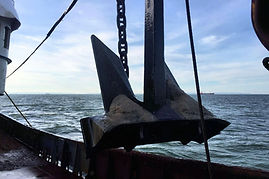
Shipwreck Search & Salvage
When a vessel sinks, or an anchor is lost, its exact position on the seabed is rarely known. The wreck or object must therefore be located before any intervention can be carried out. The search is generally conducted from the last known position using side-scan sonar. Once the wreck has been located, diving and recovery operations can begin.
Principle
A search grid is run over an area sized according to the object's approximate position, using marine geophysical instruments such as side-scan sonar, an echo sounder and, where appropriate, a magnetometer, in order to locate the object precisely.
Equipment
The CERES team uses side-scan sonar to locate the wreck and provide georeferenced imagery. The lifting system depends on the size and weight of the object and may comprise subsea lifting bags of various capacities or a barge.
Expertise

CERES carries out underwater inspections and expert assessments, often on behalf of insurers.
After locating the wreck, divers inspect it and record video of the relevant features. The findings are documented in an assessment report, with supporting video footage.
Lifting with a barge

A barge can be used to recover wrecks or heavy objects, particularly when they are to be dismantled. Recovered material is taken to a suitable storage or dismantling site.
A video inspection checks the area after recovery. The footage is supplied with the salvage report.
Recovery with lifting bags

Subsea lifting bags can provide buoyancy to assist the recovery of a wreck or submerged object. Divers install and inflate the bags according to the recovery plan.
Where suitable, the recovered vessel is towed to a port for further handling. The method is selected according to the object’s condition, weight and site constraints.


Salvage and dismantling of the trawler "Imagine"
in "Jeune Marine" magazine
By Bertrand Sciboz

The Anchors
In search of the lost anchors
on "Jeune Marine"
By Bertrand Sciboz